Heavy-duty commercial bunk beds are essential infrastructure for shelters and ministries because they must withstand high turnover, continuous stress, and rigorous safety and hygiene demands.
Heavy Duty Bunk Bed Solutions
Commercial Bunk Beds for Ministries, Shelters, and Group Housing
Key Takeaways
1
2
Heavy Duty Bunk Beds provides seam-welded, industrial-grade frames and commercial mattresses engineered for durability, safety, bed bug resistance, and long-term value.
3
Investing in durable institutional beds and mattresses reduces maintenance, downtime, pest issues, and replacement cycles, ultimately lowering total cost of ownership.
4
We partner closely with ministries, behavioral health programs, and shelters, offering field-tested products, installation guidance, and long-term support to ensure safe, efficient, dignified housing.
Learn Why Heavy Duty Bunk Beds Are Essential for Shelters and Ministries
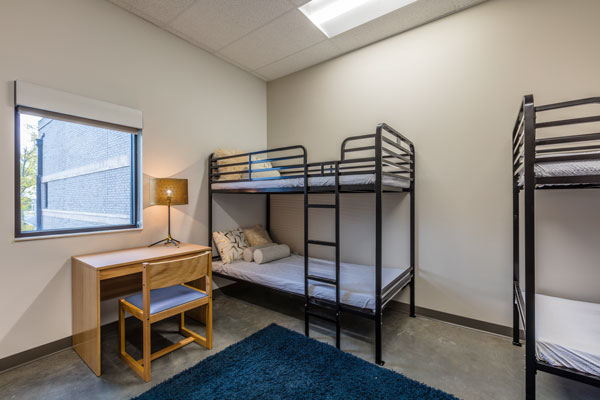
Every night in a shelter, ministry, or transitional housing facility, furniture is doing more than holding weight. It’s bearing responsibility. It must endure continuous use, be safe under stress, maintain hygienic conditions, and simplify the lives of staff who are already stretched thin. That’s why heavy-duty bunk beds are foundational infrastructure for reliable, dignified housing.
At Heavy Duty Bunk Beds, we build commercial bunk beds designed for high-traffic environments and supply institutional beds that meet the specific needs of ministries, shelters, behavioral health programs, and group housing. Our commercial mattresses are engineered to perform alongside both, offering lasting comfort and hygiene.
WHY MINISTRIES AND SHELTERS NEED SPECIALIZED BUNK BEDS
In organizations serving people in transition, the environment is dynamic, challenging, and often under-resourced. The beds in your facility must handle that reality. Let’s examine the pressures these beds face, and why not all commercial-grade options are built to handle them over the long term.

High Turnover Demands Resilience
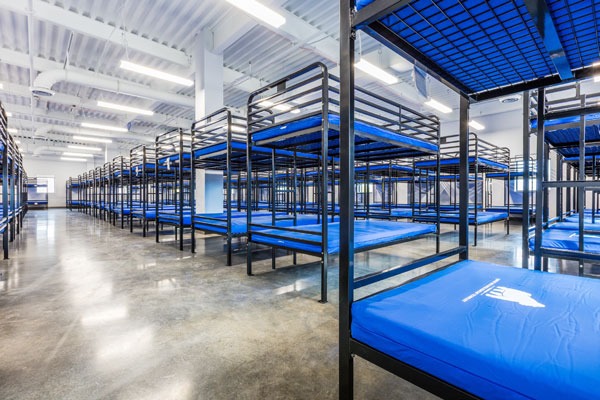
In a shelter or transitional housing setting, residents come and go frequently. Beds may be vacated in the morning, cleaned, remade, and reused that same day. Over a year, a single bunk may see dozens, sometimes hundreds, of occupants. The constant loading, unloading, and movement put stress on joints, fasteners, and welds, especially in frames that aren’t built for continuous use. That level of daily turnover makes shelter bunk beds a critical part of maintaining safe, functional sleeping spaces.
Lower-tier commercial frames often bend under repeated stress: joints may loosen, welds may crack, and ladders may wobble. When one bed fails, the ripple effect includes repairs, downtime, and disruption to residents. A durable institutional bed must tolerate daily stress without degrading.
Health, Safety, and Liability Considerations
Beyond structural integrity, beds in shared housing must protect health and safety. Some of these concerns include:
- Preventing falls from upper bunks, especially when residents may be disoriented or children are involved.
- Resisting bed bug or pest intrusion, which can spread quickly and become a service‑killer.
- Supporting staff who clean and sanitize quickly and thoroughly.
- Withstanding emergency conditions (e.g., an occupant falls on a frame, or someone inadvertently exerts extra force).
Budget Constraints and Long-term Value
Most ministries, shelters, and behavioral health programs operate with tight budgets. Grant cycles, donations, and variable funding make large capital outlays painful. It’s tempting to buy based on the lowest price. But frequent replacements, emergency repairs, or hidden costs (e.g., labor, downtime, and pest remediation) can turn a low-cost decision into a high-cost burden over a few years.
A commercial bunk bed offering long life, dependable performance, and low maintenance translates into true long-term value. In essence, you pay once for many years of service, rather than paying repeatedly for temporary fixes. That makes long-term durability especially important when choosing bunk beds for shelters and ministries.
KEY BENEFITS OF HEAVY DUTY BUNK BEDS
Heavy Duty Bunk Beds was built from the ground up to meet the needs of shelters, ministries, behavioral health centers, and communal housing. What distinguishes our systems are the features that create real-world resilience, safety, and efficiency.
Safety and Compliance
Safety is nonnegotiable.
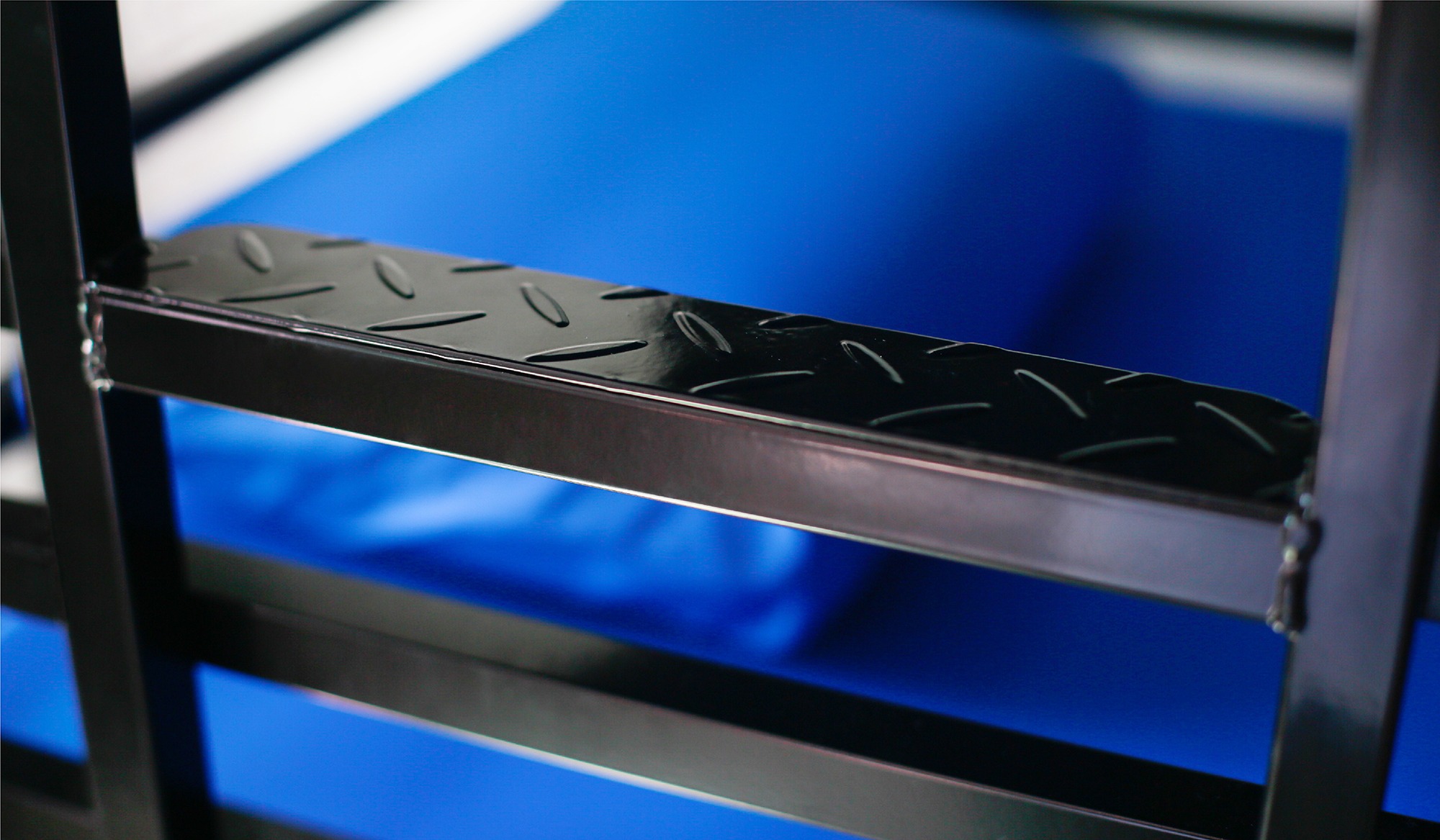
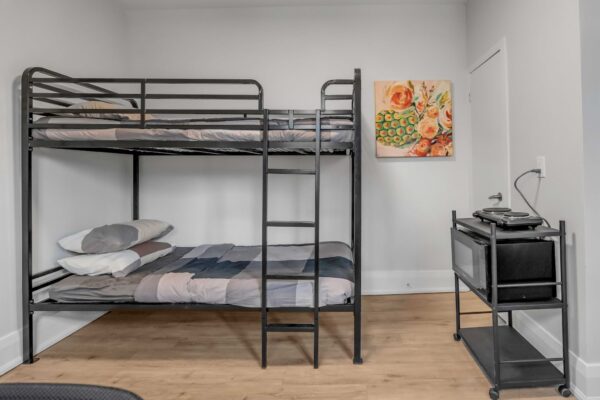
- Guardrails and ladder design: Our bunks include full-length guardrails (not partial cutouts) and ladders designed for confident climbing, even when the room is dark or the resident is groggy.
- Load capacity: Each platform is tested to support 500 pounds (i.e., 500 pounds on the top bunk and 500 pounds on the bottom). This exceeds the weight ratings of many commercial-grade alternatives and ensures performance under real-world stress.
- Structural stability: We use seam-welded connections, where every joint is continuously bonded, not spot-welded or bolted. Seam-welding eliminates gaps and weak points, forming solid connections that reduce long-term wear and prevent loosening during constant use.
- Code compliance: Our systems meet or exceed relevant safety standards for institutional use. That reduces risk and supports your audit or inspection readiness.
Because safety is central to operations, this is often the first area facility leaders investigate when evaluating bunk beds.
Durability and Longevity
A structure that survives a few months in a shelter isn’t good enough. We engineer for many years of hard use.
- Seam-welded connections provide unmatched frame stability and long-term strength.
- Industrial-grade steel is used throughout the entire frame to minimize bending, fatigue, or warping.
- Secure joints are reinforced and remain rigid under daily use, preventing squeaks or wobbling.
- Streamlined bed frames allow cleaning crews to access all surfaces without lifting or disassembling components. There are no enclosed corners or crevices that collect dirt or hide damage.
- Durable finishes, including powder-coated finishes, stand up to commercial disinfectants and moisture without rusting or degrading.
This durability means fewer repair calls, less staff time spent on maintenance, and less downtime of beds for residents.
Bed Bug Resistance
In shared housing settings, one infestation can escalate quickly and force mass replacement or fumigation. We design defense into every aspect of our system.
- Streamlined bed frame design prevents pest harborage by eliminating hidden cavities, false panels, and enclosed joints.
- Seam welds on all four sides of every connection seal off entry points entirely, preventing bed bugs from getting inside the frame. Combined with smooth, sealed surfaces, this creates a bed structure that’s easy to sanitize and leaves pests nowhere to hide. According to pest control professionals, these features make it one of the most bed bug resistant bed designs on the market.
- Commercial mattresses fit flush against the frame to eliminate potential nesting gaps.
- Cleanability-first design ensures surfaces can be cleaned quickly and thoroughly every day, without disruption.
This prevention-focused approach reflects what shelter leaders have told us works best: beds and mattresses that support daily hygiene and long-term peace of mind. That’s especially important for homeless shelter bunk beds, where cleanliness, durability, and fast turnover all matter at once.
Cost‑Effectiveness
When choosing equipment, savvy administrators compare the total cost of ownership, not just purchase price.
- Fewer replacements: Many of our beds remain in service for a decade or more without structural failure.
- Reduced repair hours: Because our systems hold their form, they rarely require fasteners to be tightened or parts to be replaced.
- Decreased downtime: Beds stay in use rather than being pulled offline for repairs or replacement, so your capacity remains intact.
- Operational savings: Reduced maintenance budget, less staff labor, and fewer emergency purchases free up resources for mission-critical programs.
THE ROLE OF MATTRESSES IN MINISTRY HOUSING
Too often, mattresses are treated as throwaway parts of the equation. That’s a mistake. They are central to the comfort, hygiene, and longevity of the sleep environment.
Challenging The ‘Disposable Mattress’ Mindset
Many organizations assume mattresses must be replaced every few years due to wear, odor, stains, or structural decline. But when you choose the right mattress system, that belief changes.
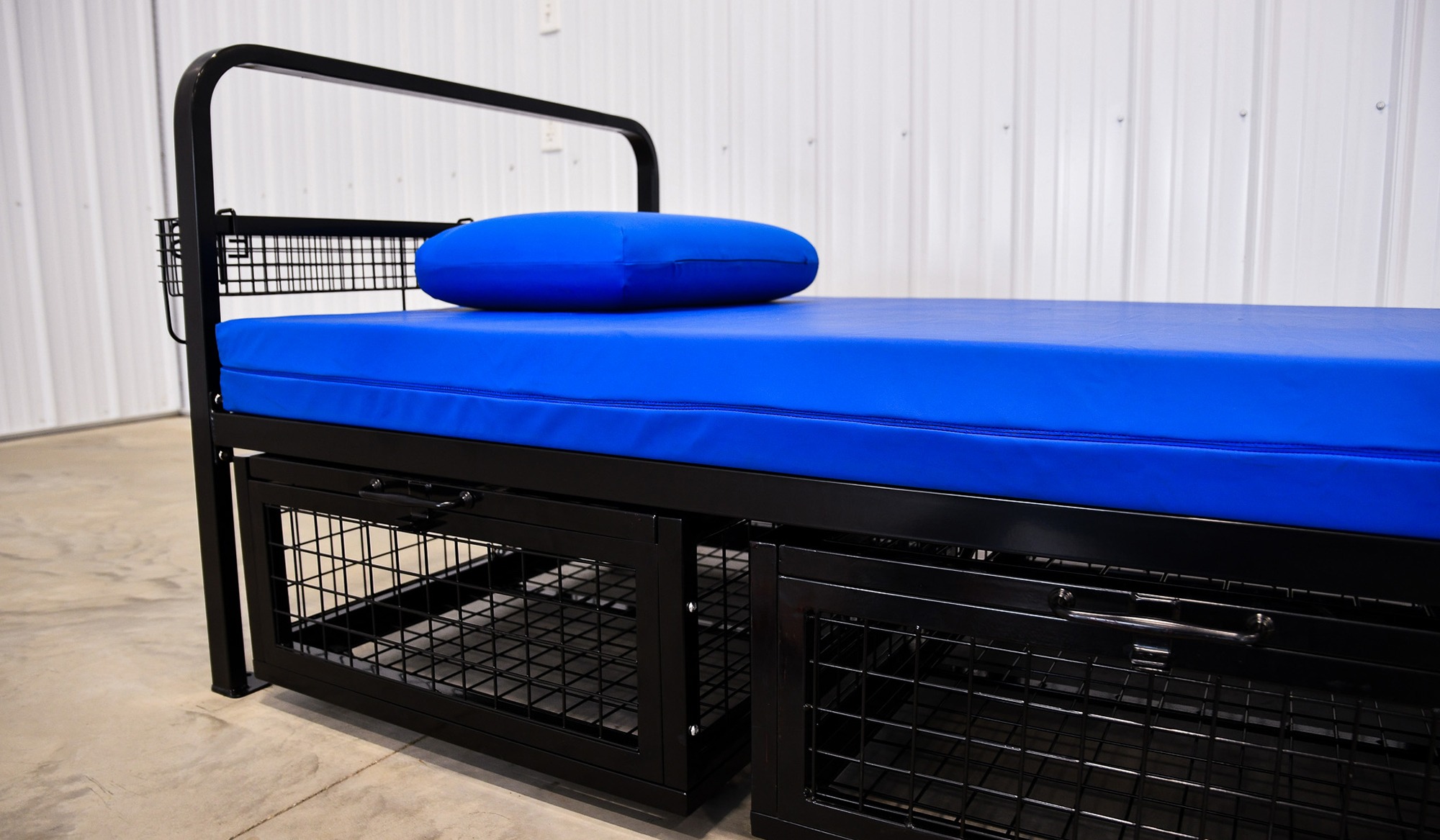
Our commercial mattresses are engineered for sustained performance. Numerous clients report using the same units for a decade or more with minimal decline in comfort or support. Over time, that translates into huge savings and fewer interruptions in resident housing routines.
Hygiene, Cleaning, and Maintenance
We build our mattresses to work within real-world cleaning constraints.
- Waterproof, breathable covers: The outer covers reject fluids and prevent liquid absorption.
- Polyester/polyurethane material: Our covers stay silent, cool, and comfortable. Unlike vinyl, they make no noise when the sleeper rolls over and don’t trap heat or moisture.
- Three-sided zipper: Each cover can be completely removed and machine-washed in the event of soiling or illness. Once clean, it can be zipped back around the foam core.
- Hypoallergenic and fire safe: The internal foam cores resist allergens and comply with open-flame and smoldering safety standards (such as 16 CFR 1632 / 1633 in relevant jurisdictions).
These bunk bed features are especially valuable in shelters, rescue missions, and group housing where hygiene and durability matter every day.
How Mattress Fit Supports Pest Prevention
The mattress and frame must work as a system. Our mattress dimensions, edge support, and flush fit ensure there are no gaps or spaces that pests could exploit. The smooth mattress edges meet the frame seamlessly, and nothing protrudes to give insects hiding spots.
Additionally, a mattress that stays structurally sound (i.e., no sagging or delamination) maintains that fit and integrity over years, reinforcing the pest-resistant design of the entire bed.
Frequently Asked Questions
Why are shelter bunk beds essential for high-turnover housing environments?
Shelter bunk beds are designed to handle constant use, frequent turnover, and daily cleaning routines. In shelters, rescue missions, and group housing, beds may be used by different occupants every night, so durability, stability, and ease of maintenance are critical.
What minimum weight capacity should shelter bunk beds support?
Shelter bunk beds should support at least 500 lbs per sleeping platform to handle continuous use in high-turnover housing environments. This baseline helps improve safety, reduce strain on the frame, and support long-term reliability for organizations.
How do shelter bunk beds support hygiene and cleanliness in shared housing?
Shelter bunk beds are typically built with sealed materials and streamlined designs that make cleaning faster and more effective. Smooth surfaces and minimal crevices help staff maintain sanitary conditions in environments where hygiene must be managed every day.
What features should you look for in bunk beds for shelters and ministries?
Key features include high weight capacity, seam-welded frames, full-length guardrails, and easy-to-clean surfaces. In shelters and ministries, these features help improve safety, reduce maintenance demands, and ensure the beds can withstand long-term use.
How do shelter bunk beds help reduce long-term costs for organizations?
Durable shelter bunk beds reduce the need for frequent replacements, repairs, and pest-related treatments. Over time, this lowers total cost of ownership and allows organizations to allocate more resources toward programs and services.
WHY CHOOSE HEAVY DUTY BUNK BEDS?
In a crowded marketplace, ministries, shelters, and behavioral health centers need confidence that they’re choosing a supplier who understands their pressures, constraints, and mission. Heavy Duty Bunk Beds has built that trust by combining design, testing, field feedback, and mission alignment.

Experience Rooted in Real Needs
Our designs are shaped by direct feedback from ministries, shelters, and housing programs that rely on these beds every day. We’ve listened to the challenges staff face and adjusted our products based on what actually works in the field. The result: systems that solve real problems, not hypothetical ones.
Field-tested Results
Numerous long-standing installations continue to perform reliably after a decade or more, with original frames still in place and minimal maintenance required. These long-term results speak directly to the durability our clients count on.
Mission‑Driven Partnership
We approach every quote, installation, and support call as a partnership. Our clients are partners, and we support their mission with solutions built for real-world challenges. We help plan layouts, optimize maintenance strategies, and advise on balancing budget and durability. That level of service ensures your investment supports your calling.
Essential Criteria For Ministries
When evaluating institutional beds or commercial bunk beds for your organization, these are nonnegotiables:
| FEATURE | WHY IT MATTERS |
|---|---|
| Seam-welded frame | Eliminates weak joints, leaving no crevices for pests to hide and reducing long-term maintenance needs |
| High load rating | Each platform is rated to hold 500 pounds, so beds won't sag or fail under heavy or repeated use |
| Full-length guardrails and stable ladders | Prevents accidents and supports resident safety |
| Waterproof, washable commercial mattresses | Supports hygiene and extends usable life |
| Quiet, stable construction | Minimizes sleep disruption and noise complaints |
| Proven multiyear performance | Reduces replacement cycles and lock-in costs |
| Support and partnership | Helps you plan for facility layout, maintenance, and growth |
INSTALLATION, MAINTENANCE, AND BEST PRACTICES
To get full value from any heavy-duty bunk bed system, the way it’s installed and maintained matters. Here are some best practices to maximize lifespan and performance.
Proper Installation From Day 1
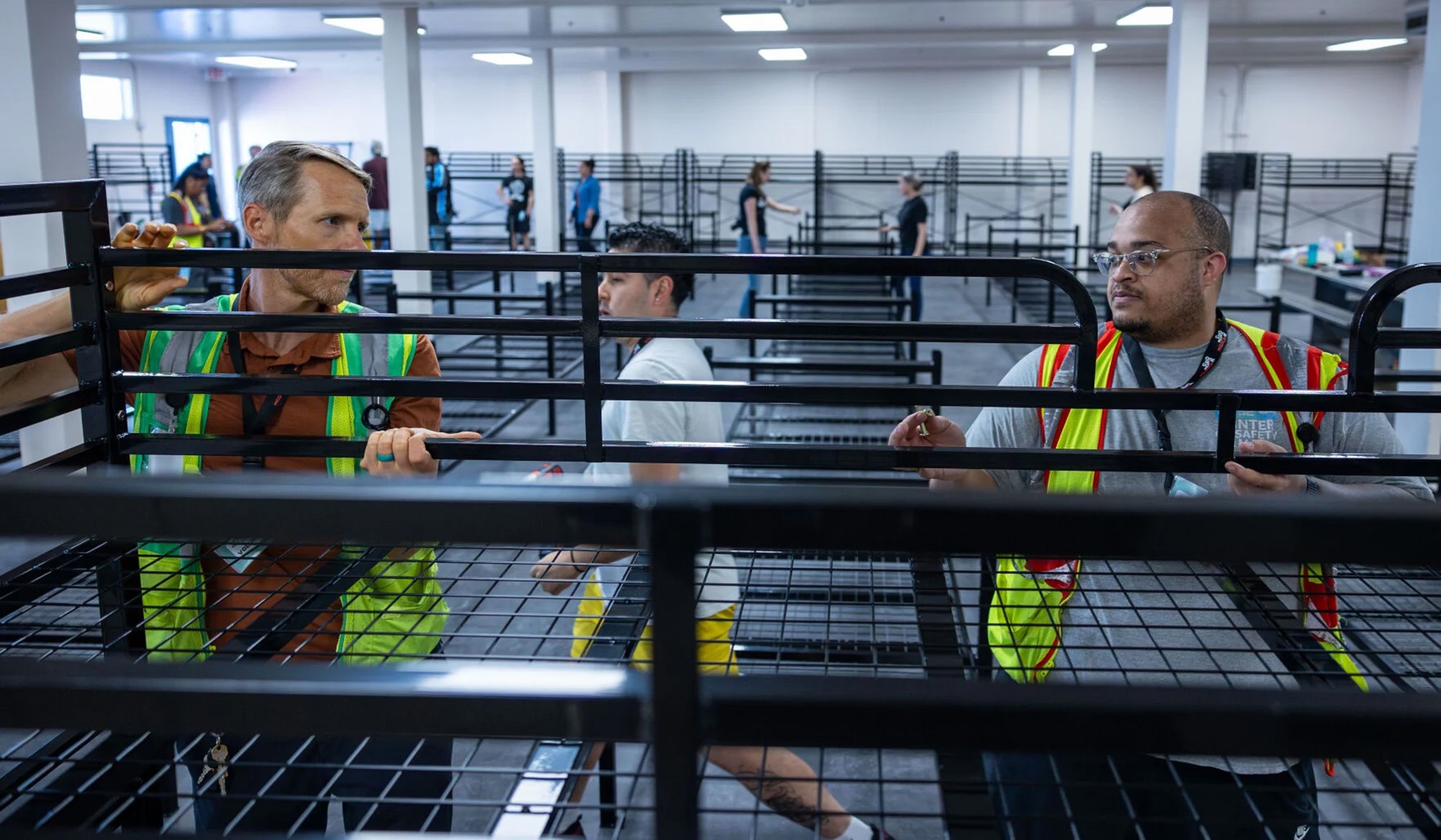
- Anchor frames where applicable (especially for taller units or units near windows).
- Use shims if floors are uneven; don’t force frames to tilt.
- Tighten all fasteners and inspect after setup; some settling may require minor adjustments.
- Train maintenance staff during installation, so they understand how to check and service over time.
Regular Inspections and Preventative Maintenance
- Routinely check for loose bolts or unusual sounds.
- Inspect welds, joints, and corners (not just flat surfaces) for early signs of wear.
- Clean regularly around joints and crossbars to prevent buildup.
- Turn or rotate mattresses periodically to avoid concentrated wear in one zone.
Cleaning Protocols
- Use appropriate cleaners that won’t damage metal or mattress covers.
- Take advantage of removable covers for deep sanitizing.
- In the event of accidents or illness, remove the mattress, disinfect the frame, and let both dry fully before reinstalling.
- Encourage staff to keep protocol logs for cleaning cycles and inspections.
LET’S BUILD SOMETHING THAT LASTS
Reliable beds contribute to a well-run facility, where residents are treated with dignity and operations stay on track. When residents walk into their space and see secure, clean, well-made bunks, they feel cared for. When staff don’t hear nightly squeaks or have to fix ladders mid-shift, they can focus where they’re needed most.
Heavy Duty Bunk Beds is ready to help you design and implement a solution that works for your mission today and tomorrow. Our team will guide you from planning through installation and ongoing support.
If you’re starting a new project, renovating, or evaluating replacement cycles, request a quote. We’ll assess your facility needs, propose optimal solutions, and provide cost comparisons to help you justify your investment.
Together, we can elevate safety, increase efficiency, and deliver dignity through durable housing design. Let’s build for the long term — because the people you serve deserve nothing less.
CONTACT US TODAY!
REQUEST A QUOTE


Anthony Gomez
October 29, 2026
We've converted multiple buildings on our site to use the ESS metal bunks from existing wooden bunks. The beds have met or exceeded expectations in every way. The customer service is professional, and they are always a pleasure to work with. We will be purchasing from them again in the future!

Shelly Hoffman
October 15, 2026
Shelter of Flint has been working with ESS Universal for several years now, purchasing multiple bunk beds, convertible beds, mattresses, and storage lockers. Phil and the entire team there have been responsive to our needs and are able to fulfill orders quickly when needed. They are flexible, communicate well, and provide excellent products. Highly recommend!!

Amy Loof
October 15, 2026
These beds area amazing and we so needed for our organization. We were spending so much money on beds that just didn't work in a shelter setting, and now we have beds that do. It is really great and the customer service is wonderful. The whole process was just excellent!

Johnson's Nursery
October 14, 2026
Wonderful service and superior quality product. Our needs and expectations are always exceeded with ESS!

Joel Whitehead
October 13, 2026
Great products and great service! Very easy to work with as a family business. I highly recommend them!

Carolyn Peck
October 13, 2026
We are so happy with our bunk beds. We renovated a dorm this past year on our campground, which is used for youth camp and campmeeting for all our churches in North Georgia. We had nothing but praise from children and adults who used the bunk beds. We appreciate such a quality product and will not look anywhere else for bunk beds! Thanks for a great experience and service from your company.

Daniel Awabdy
October 7, 2026
These bunkbeds are very sturdy have blessed our ministry and have completely turned things around when it comes to a sound mind for a resident who live with us for more than a year. We have had zero issues out of them. They have met our needs completely!

Larry Nelson
September 29, 2026
Exceptional products, easy to work with,very professional! We will be buying all are beds and mattresses from them from now on.

Jonathan Layne
September 24, 2026
We have been using ESS for a few years now and they always come through. Phil is amazing and great to deal with. Thank you!

Remington Mallery
September 18, 2026
This family owned cap pant came through with us when all major companies failed! We had a need for 40 bunk beds to be installed in our shelter and our timeline was two weeks…not only did they have the product but worked to make it to us in time which included them working on the weekend! Will be using them in the future!

Tyson Trout
September 11, 2026
I work for a very large orchard company and we house up to 500 workers throughout the year for our operations. We have purchased a few hundred Heavy Duty Bunk Beds over the years and they hold up to the abuse our workers put on them better than any other beds we have. Great beds and high quality.

John Lowry
September 9, 2026
We have been using 30 twin beds since September of 2023 in our one facility. The beds are fantastic. Super sturdy and functional. They are relatively lightweight and easy to maneuver compared to our previous heavy laminated particle board exterior beds. They allow the mattress to breathe as well. Coupled with a mattress cover, they are great a 1-2 punch. We have grown men of all sizes in the beds and everything has held up beautifully. The beds don’t provide spaces for critters to hide and they won’t absorb moisture either if treatment is necessary. The beds are easy to assemble for a single individual. I am so happy with their product that we are looking to purchase another 60 beds along with the locker boxes for below the beds.